Brian Rochel Presents at National Employment Lawyers’ Association’s Annual Convention

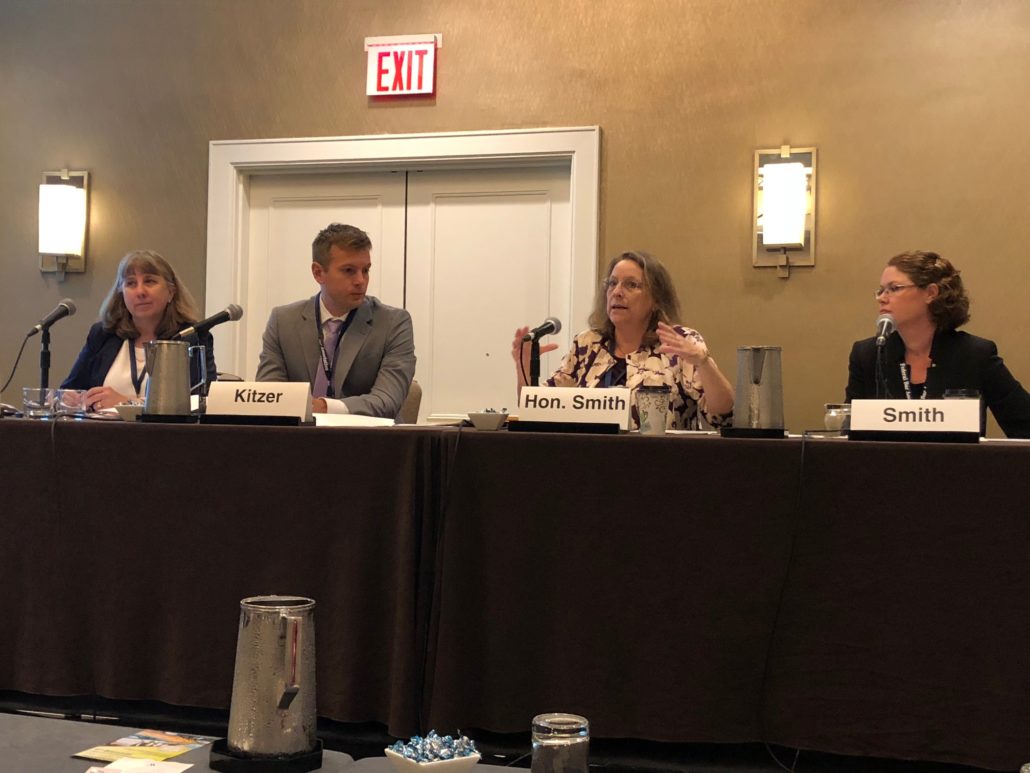
Last week, Brian Rochel had the privilege of presenting at the National Employment Lawyers Association (NELA) Annual Convention in Baltimore, MD. Brian’s presentation, “Anatomy of an Arbitration,” walked through the arbitration process step by step, from strategy considerations before filing through final hearing and enforcement of awards.

Many employees are forced into arbitration due to mandatory arbitration clauses in their employment agreements. Arbitration can feel mysterious and intimidating, especially since it is a private process and decisions are often not public. In his presentation, Brian aimed to demystify arbitration for fellow employee advocates by many ways that arbitration actually benefits workers. Brian and his fellow panelists discussed, among other things:

  • Strategic considerations before filing: weighing risks, costs, forum rules, and arbitrator selection.
  • Pleading standards and motions practice in arbitration forums.
  • Discovery in arbitration, including handling document requests, depositions, and subpoenas under applicable rules.
  • Pre-hearing and dispositive motions: when and how to file, and strategic pitfalls.
  • The arbitration hearing itself: preparation, presenting evidence, direct and cross-examination, and closing arguments.
  • Post-hearing considerations, including enforcement, vacatur, and potential appeals.

As employee advocates, it is critical that we do not run from arbitration but embrace it the same way we embrace jury trials–and do our best to win for our clients.

Brian thanks NELA for the invitation to speak, and to the many attorneys across the country who continue to fight for employee rights in every forum—courtrooms, arbitrations, and beyond.

Phillip Kitzer Presents at the Employment Law Institute on Litigating Employment Cases When AI Is in Play

At a recent continuing legal education program hosted by the Employment Law Institute of the Upper Midwest (ELI), Phillip Kitzer of Kitzer Rochel, PLLP joined Damien Riehl, Karen Odash, and moderator Jack Sullivan to present “Litigating Employment Cases When AI Is in Play.” The session explored how artificial intelligence tools are transforming workplace decisions—and how those changes are raising new challenges in employment litigation.

The presentation examined two common scenarios where AI is now influencing employment outcomes: hiring and termination. The panel discussed how algorithmic resume screeners and automated decision-making tools can create unintended bias or disparate impact, particularly in age and discrimination cases. They also addressed the risks of using generative AI in performance reviews or disciplinary documentation, where inaccuracies or “hallucinations” can expose employers to wrongful termination or spoliation claims.

Panelists shared practical strategies for both plaintiffs and defendants, including how to obtain and preserve AI-related evidence such as training data, prompts, and algorithmic outputs. They emphasized the importance of transparency in vendor contracts, documentation of AI use, and the ethical duty to ensure fairness and accountability when technology is involved in personnel decisions.

The takeaway: AI is not a shield against liability. Lawyers and employers alike must understand how these tools work, plan for discovery, and develop responsible AI policies to ensure fairness in the workplace.

Kitzer Rochel represents employees in complex employment disputes, including discrimination and wrongful termination cases involving AI or algorithmic decision-making. To learn more, visit www.kitzerrochel.com

All Three Kitzer Rochel Attorneys Present at the 2025 Upper Midwest Employment Law Institute

We are proud to share that all three of our attorneys—Brian Rochel, Frances Baillon, and Phillip Kitzer—were featured presenters at this year’s Upper Midwest Employment Law Institute (ELI), held May 19–20, 2025, at the Saint Paul RiverCentre. As one of the premier employment law conferences in the country, the ELI brings together top legal minds to explore the evolving landscape of workplace law, and our firm was honored to contribute in three impactful sessions.

Phillip Kitzer: AI in Employment Litigation

Phillip Kitzer presented in a forward-looking session titled “Litigating Employment Cases When AI Is In Play – From Purchased AI Tools to AI-Drafted Decisions.” In collaboration with other experts in law and technology, Phillip explored how artificial intelligence is already influencing the workplace—and how it’s affecting litigation strategy. The panel covered AI tools used in hiring, evaluation, and decision-making processes, and addressed the challenges of litigating cases where AI plays a central role. Attendees gained critical guidance on discovery, evidence, and the novel legal questions raised by AI technologies.

Frances Baillon: Updates on Workplace Harassment Litigation

Frances Baillon was a member of a panel presenting on “Workplace Harassment Case Update 2025 – Title VII Cases”, delivering insights into recent developments under Title VII and emerging harassment litigation trends. This session broke down critical case law updates and examined how courts are interpreting hostile work environment and employer liability standards. Frances contributed her expertise in representing employees in complex harassment cases, providing actionable takeaways for practitioners adapting to evolving legal standards.

Brian Rochel: Litigating Retaliation Claims at Summary Judgment

Brian Rochel co-presented “Retaliation Claims at Summary Judgment – Winning Approaches to Discovery, Briefing, and Argument from Both Sides”, a practical session focused on one of the most dynamic and challenging areas of employment litigation. Brian shared his plaintiff-side strategies for navigating discovery, leveraging factual records, and constructing persuasive arguments at the summary judgment stage. The session offered a rare dual-perspective approach, with presenters from both sides of the bar discussing how to position retaliation claims for litigation success in an era of heightened scrutiny. Brian presented along with Kristin Berger Parker at Jones Day in Minneapolis.

This year’s Institute showcased Kitzer Rochel’s ongoing leadership in employment law, particularly in areas undergoing rapid transformation. Whether addressing the impact of AI, strengthening anti-retaliation advocacy, or navigating new harassment standards, our attorneys continue to bring clarity and depth to some of the field’s most pressing issues.

For more information on our work or to connect with any of our attorneys, contact us today.

Phillip Kitzer Co-Authors Chapter in Minnesota CLE’s Internal Employment Investigations Handbook

Phillip Kitzer of Kitzer Rochel, PLLP recently co-authored a chapter in the newly published Internal Employment Investigations Handbook, released by Minnesota Continuing Legal Education (Minnesota CLE). The chapter, titled “Mistakes in Investigations and the Consequences,” examines how errors during workplace investigations can lead to serious legal exposure for employers and provides practical guidance for conducting thorough, fair, and legally compliant investigations.

The chapter explores the legal and ethical pitfalls that often arise in internal investigations, including defamation, retaliation, discrimination, privacy violations, and improper handling of electronic evidence. Through real-world hypotheticals and analysis, the authors illustrate how even well-intentioned investigations can go wrong—and how careful planning, neutrality, and adherence to best practices can prevent costly mistakes.

Phillip regularly advises and represents employees in retaliation, discrimination, and whistleblower claims that often involve flawed or biased investigations. His contribution to this handbook reflects his extensive experience litigating these issues and his commitment to improving fairness and accountability in workplace investigations.

To learn more about Phillip’s practice or to contact Kitzer Rochel, visit www.kitzerrochel.com

Brian Rochel Co-Authors Article Discussing Major Change to Employment Discrimination Law in Bench & Bar of Minnesota

We are pleased to share that Brian Rochel has co-authored an article featured in the December 2024 edition of Bench & Bar of Minnesota. The article explores the U.S. Supreme Court’s major decision in Muldrow v. City of St. Louis (2024). There, the Supreme Court lowered the threshold for proving discrimination under Title VII, eliminating the requirement for plaintiffs to show a “materially significant disadvantage.” The Court ruled that plaintiffs need only demonstrate “some harm” to an identifiable term or condition of employment, broadening the scope for discrimination claims.

Brian co-authored the article with Jenny Gassman-Pines, an experienced trial lawyer at Greene Espel in Minneapolis. Brian and Jenny discuss Muldrow’s implications on employment law claims as well as workplace Diversity, Equity, and Inclusion (DEI) initiatives. Ali Simon, a Kitzer Rochel law clerk and current University of Minnesota law student, contributed to the article as well.

You can read the article in the latest issue of Bench & Bar of Minnesota here. If you have questions about Muldrow, employment law more generally, or are wondering if you have experienced unlawful harm at work, contact us today.

Kitzer Rochel Recognized by Tech Titan

Kitzer Rochel is proud to announce that we have been recognized by ModeOne as a Service Partner! ModeOne is a cutting-edge leader in providing high quality solutions for and obtaining and analyzing vital evidence stored on smartphone and short-message chat applications. By choosing to partner with ModeOne, Kitzer Rochel continues its commitment to providing its clients with the best tools for success in their cases.

In recognizing Kitzer Rochel as a Service Partner, ModeOne highlights Kitzer Rochel’s promise of excellence to its clients, by using the best tools available and utilizing pioneering technology. Kitzer Rochel looks forward to continue to grow its relationship with legal technology leaders like ModeOne. These two champions of greatness will continue to stand together as we change not only the legal landscape, but the world.

Frances Baillon Co-Authors Article Explaining Revisions to MHRA and Increased Worker Protections

Frances Baillon, with co-author Sam Kramer, wrote an article published in the September 2024 edition of Bench & Bar. The article, “Toward a More Perfect Minnesota: How the ’23-’24 Legislature Expanded Civil Rights Protections,” describes the most recent amendments to the Minnesota Human Rights Act. These include increased protections in the areas of disability, gender identity, familial status and damages available for violations of the Act. The article discusses the impact of these amendments and how they will continue to ensure strong civil rights protections for all Minnesotans.

The full article is available here.

Frances is a distinguished attorney recognized for her exceptional legal expertise and dedication to her clients. She has been named a Super Lawyer and is repeatedly celebrated among the Top 50 Women and Top 100 lawyers in her field. Frances is a frequent speaker and author on employment law given her extensive experience and many accolades and achievements.

If you have any questions about recent legislation affecting employees in Minnesota, or employment law more generally, do not hesitate to contact us to see how we can help.

Brian Rochel Quoted in Article Discussing Tim Walz’s Labor Record

We are proud to announce that Brian Rochel, a partner at Kitzer Rochel PLLP, was recently quoted in a Law360 article discussing Vice President Kamala Harris’s newly announced running mate, Minnesota Governor Tim Walz. Rochel was asked to comment on Governor Walz’s extensive labor and employment record. In the article, Brian highlights the significant impact of Walz’s policy initiatives, particularly in areas such as pay transparency, paid leave, and gig worker protections.

Brian noted, “It would be fair to look at some of the policy initiatives that Gov. Walz has helped champion in Minnesota as the kinds of things that I would expect would show up on a platform for a Harris-Walz ticket.” His insights provide valuable context on how Walz’s track record could influence future national labor policies if elected as Vice President in the 2024 election.

You can find the full article here.

We are pleased to see Brian’s expertise recognized in this important discussion about the future of labor and employment law in the United States. Stay tuned for more updates from Kitzer Rochel, PLLP as we continue to advocate for the rights of workers across the nation.

The Law Continues to Get Better for Minnesota Employees: MHRA Expanded

The Minnesota Human Rights Act (MHRA) has been expanded in several important ways that will help employees across Minnesota. Governor Walz has signed a new bill, HF 4109, and it’s packed with great updates to the MHRA to help workers all over the state. Some highlights of the changes include:

Key Points of the New Law

  1. Intersectional Discrimination: The new law recognizes that discrimination can happen to people who belong to more than one protected group. This means if someone faces unfair treatment because they belong to multiple groups, like being both a woman and a person of color, the law will protect them.
  2. Disability Definition: The law now has a broader definition of “disability.” It includes conditions that come and go or are in remission, aligning more closely with the Americans with Disabilities Act Amendments Act (ADAAA).
  3. Harassment Protection: It’s now clear that harassment based on any protected characteristic (like race, gender, or disability) is against the law, not just sexual harassment.
  4. Familial Status: The definition of “familial status” has been expanded, but the details are not provided in the summary.
  5. Extended Deadlines: If the Minnesota Department of Human Rights (MDHR) dismisses a claim, workers now have 90 days to file a lawsuit, instead of the previous 45 days. This matches the federal Equal Employment Opportunity Commission (EEOC) limit.
  6. Statute of Limitations: If MDHR takes too long to investigate a case, workers won’t lose their right to file a lawsuit because of it. This fixes some old case law problems.
  7. Punitive Damages: There is no longer a cap on punitive damages for claims against non-government entities. This means workers can potentially receive more money if they win their case because their employer intentionally or recklessly violated the law.
  8. Treble Damages: The law confirms that workers can get triple the amount of emotional distress damages, not just economic damages.
  9. Jury Decisions: In cases under the Minnesota Human Rights Act, a jury, not a judge, will decide all damages questions.

How the Law Came to Be

This bill was created by the Minnesota Department of Human Rights (MDHR) and is the first of its kind. The MDHR submitted an omnibus bill that was carried forward and put into law in a bipartisan effort, and signed by Governor Walz. Kitzer Rochel attorneys Frances Baillon, Phillip Kitzer, and Brian Rochel all helped in the effort to expand the MHRA along with many other members of Minnesota’s Chapter of the National Employment Lawyers Association (MN-NELA). Thanks to the effort of many dedicated lawyers and lawmakers, we’ve achieved something amazing by working together. This new law will provide better protection and support for workers in Minnesota.

When Do the Changes Come Into Effect

Some of the new provisions are in effect already because they only clarify the existing law. Any new legal requirement added by the law will go into effect on August 1, 2024. Contact us if you have questions about this exciting new update or employment law more generally.